Rack Supported Industrial Coolers and Freezers: Benefits, Construction and Design
Article Author: Philip Nelson
Industrial coolers and freezers allow warehouses and distribution centers to store temperature-sensitive products under controlled conditions. When planning a new cold storage area, businesses should consider a rack supported cooler or freezer.
A rack supported cooler or freezer integrates the storage rack with the structure supporting the enclosure’s roof, combining two elements that would otherwise be designed and constructed separately. This approach can increase storage density and simplify construction sequencing, but it also limits future changes to the rack layout. Understanding these trade-offs helps warehouse and operations professionals determine whether rack supported, or conventional construction is the better fit.
This article covers these trade-offs, including what to consider when planning for storage capacity, future growth, and long-term flexibility. It explains how rack supported coolers and freezers work, how their construction differs from conventional cold storage buildings, and which racking systems may be appropriate for different operations.
What Is a Rack Supported Industrial Cooler or Freezer?
A rack supported industrial cooler or freezer is a temperature-controlled storage enclosure in which the racking system supports the roof or ceiling assembly. The rack is designed as part of the building structure rather than installed as an independent storage system inside a completed building.
In a conventional arrangement, the building structure supports the enclosure, and the racking is installed separately inside it. In a rack supported design, the rack and enclosure are planned together, allowing the storage system to serve both a material handling function and a structural function.
Rack supported cold storage can be designed for a range of inventory and material handling requirements. The appropriate configuration depends on storage capacity, pallet access, inventory characteristics, equipment requirements and the desired temperature.
What Are the Benefits of Rack Supported Cold Storage?
Rack supported construction can offer several advantages when the storage layout and required capacity are well defined.
Higher Storage Density
Because the racking also serves a structural purpose, the design can avoid the additional structural framework and interior obstructions that may otherwise occupy valuable space. This can allow more of the available footprint to be dedicated to pallet storage.
The actual capacity advantage depends on the enclosure dimensions, rack height, aisle widths, material handling equipment and storage method selected. A rack supported design does not automatically provide the highest possible density; the layout must be engineered around the operation’s requirements.
More Integrated Construction
Conventional construction generally requires the building enclosure to be erected and approved before rack installation can proceed inside it. Once the rack system is installed, an additional signoff must occur before occupancy. Rack supported construction allows the rack installation and enclosure installation to be coordinated as parts of the same structure, meaning one signoff for both.
The rack is erected first or in coordination with the cladding installation, and the enclosure components are installed around the rack as the work progresses. This can reduce the need for separate construction and approval phases, although actual schedules depend on engineering, permitting, site readiness and coordination among contractors.
Potentially Lower Structural Costs
The rack supported approach can reduce the need for a separate structural framework because the racking performs part of the building’s structural function. It can therefore be a cost-effective option when the planned storage configuration is suitable for the building design.
However, total project cost also depends on the slab, insulation, refrigeration equipment, fire protection, engineering, permitting and installation. A conventional building may justify its additional structural cost if flexibility or phased expansion is important.
Important Considerations When Deciding on a Rack Supported Cooler or Freezer
Choose a Racking System That Fits Your Operation
The best racking system depends on the number of pallets to be stored, the number of stock-keeping units (SKUs), inventory rotation, pallet accessibility and material handling requirements. Because the rack is part of the building structure, selecting the storage method is also a long-term building design decision.
Selective Pallet Rack
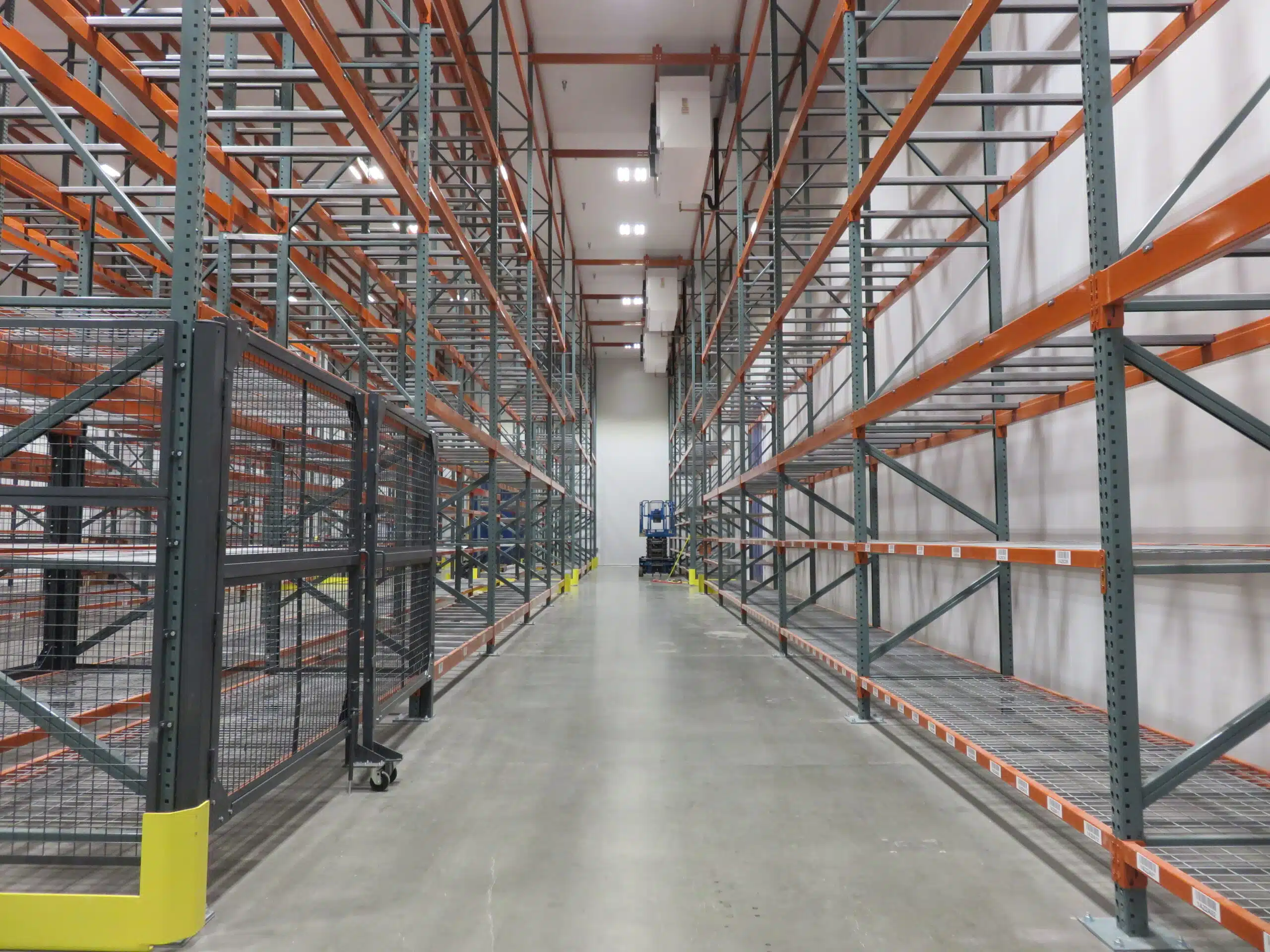
Selective rack provides direct access to each pallet position from the aisle. It is appropriate when an operation needs access to many SKUs and individual pallets without moving other inventory first.
The tradeoff is that aisles and access to individual positions can use more floor space than denser storage methods.
REB worked with a pet supplies retailer to design a rack supported cooler system comprised entirely of selective racking. Read the full case study.
Drive-in Rack
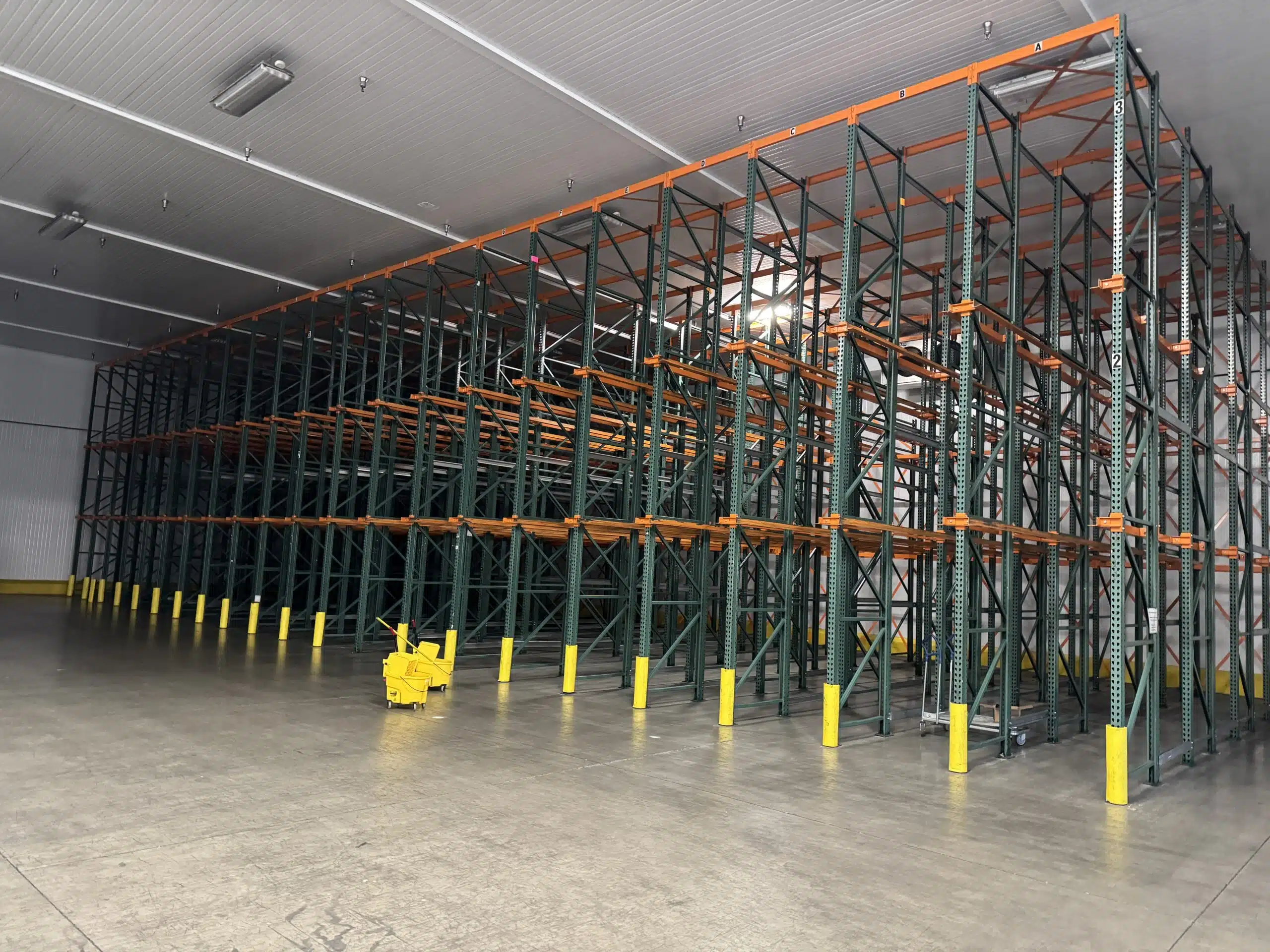
Drive-in rack allows lift trucks to enter storage lanes, reducing the number of aisles needed and increasing storage density. It is generally most suitable when inventory can be stored in deeper lanes and the operation does not require direct access to every pallet at all times.
The storage arrangement can be appropriate for large quantities of the same SKU, but inventory rotation and access requirements must be evaluated carefully.
Push Back Rack
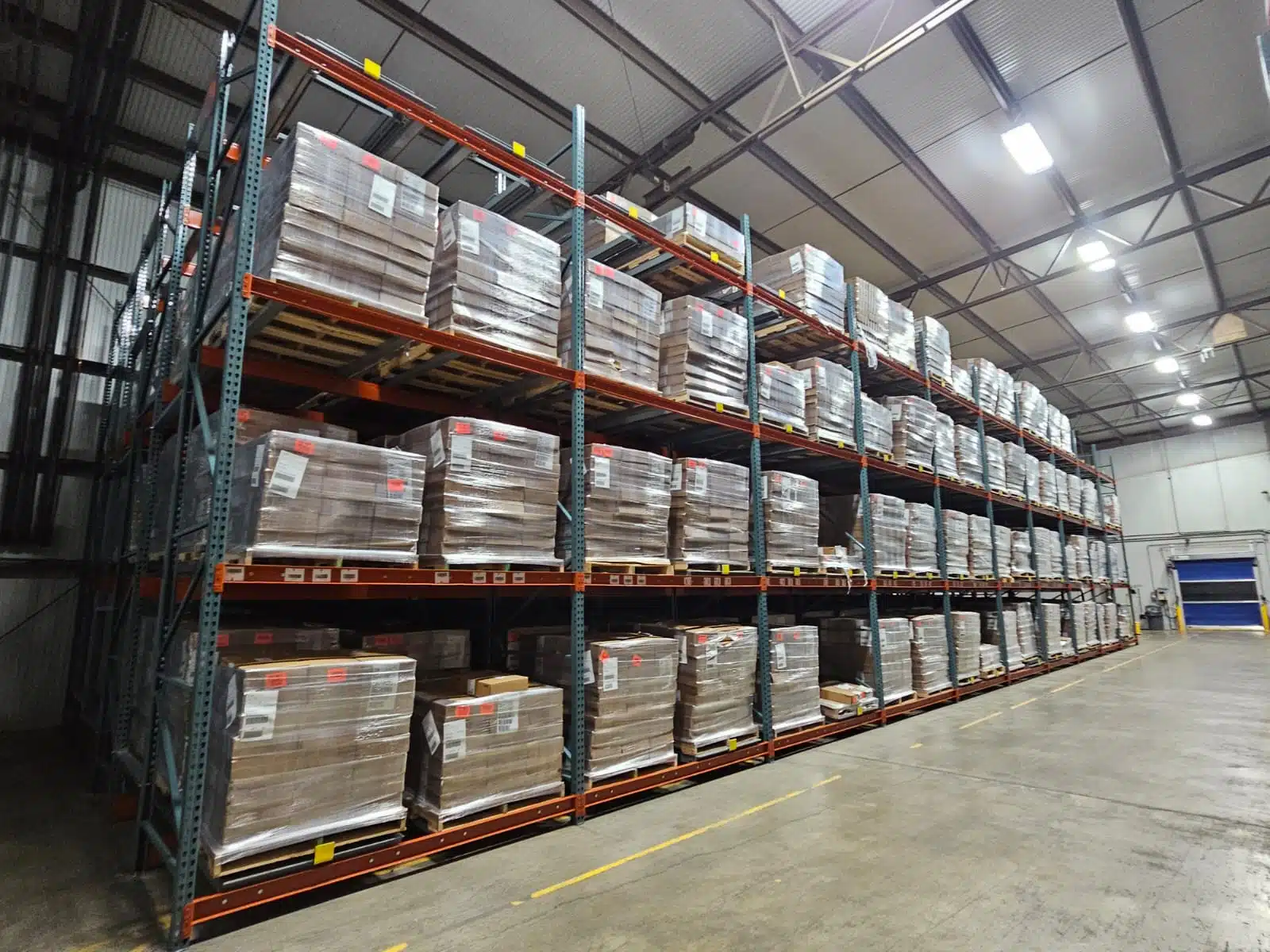
Push-back rack stores pallets on nested carts that move along inclined rails. Pallets are loaded and retrieved from the same aisle, with subsequent pallets moving forward as the front position is emptied.
This approach provides denser storage than selective rack while maintaining access to multiple pallet positions from the aisle. It can be useful when the operation needs more density but still requires access to multiple SKU groups.
Other High Density Options
Pallet flow and pallet shuttle systems may be appropriate for operations seeking high-density storage with specific inventory rotation or throughput requirements. Their suitability depends on pallet characteristics, operating conditions, required selectivity and material handling processes.
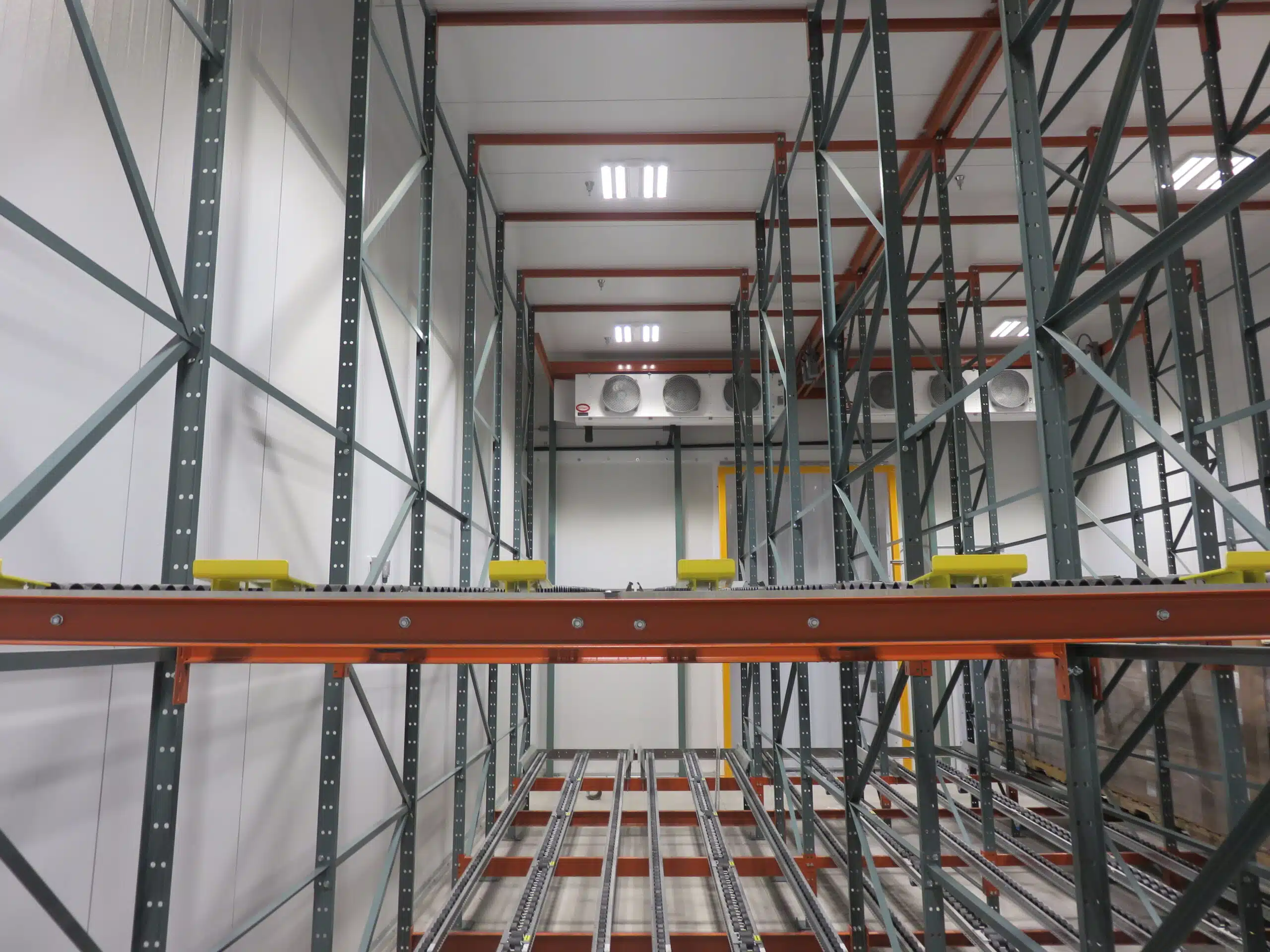
The key consideration is not simply which rack type provides the most density, but which system best supports the operation’s inventory and material flow over the life of the building. If the business expects to change storage methods later, that possibility should be evaluated before the rack-supported structure is designed.
REB partnered with a vaccine distributor to design and install a rack supported cooler and freezer. The freezer section was entirely comprised of pallet flow racking. Read the full case study.
Consider the Long-Term Flexibility You Need
Rack supported construction is most appropriate when a business has a well-defined storage requirement and can commit to a particular rack configuration for the foreseeable future.
In contrast, rack supported construction may be less suitable when the operation expects significant changes to inventory profiles, storage methods or facility use.
For example, a rack supported structure is likely not suitable for a business that currently needs selective rack but expects to switch to pallet flow or a pallet shuttle system later. Because the rack supports the roof, changing the rack type or configuration may affect the building structure, not just the storage layout.
In this case, a conventional building with an independently supported roof and walls offers greater flexibility. It allows the operation to install racking in phases, reserve space for staging, or change storage methods later without redesigning the building structure. That flexibility comes with the cost of providing a separate building framework.
Plan for Future Growth and Operational Changes
Future growth should be evaluated before the cooler or freezer is designed. The decision is not simply whether the business expects to grow, but how quickly it expects to grow and whether that growth should be accommodated within the initial structure.
Consider an operation that needs capacity for 800 pallets today and expects to add approximately five pallets annually. If sufficient space is available, designing for 850 pallets initially may be more practical than constructing additional capacity later.
A different situation arises when a business expects to double its volume within two years. Building a much larger cooled or frozen enclosure immediately may mean paying to refrigerate space that will not be used for some time. Depending on the cost of cooling the additional space and the available site, constructing a second adjacent rack supported enclosure later may be a better option.
A future connection between adjacent enclosures, such as a doorway, may be possible if planned into the design. However, it should not be assumed that an existing rack supported building can simply be extended without engineering and construction work.
REB’s project experience indicates that many rack supported cold storage projects are designed around the customer’s current pallet requirement. That can work well when capacity and the storage method are expected to remain stable. When substantial growth or operational change is anticipated, a conventional building may provide more long-term value despite its higher structural cost.
Before choosing a design, evaluate:
- Current pallet capacity and expected annual growth.
- The number and distribution of SKUs.
- Required inventory rotation and pallet accessibility.
- Whether the storage method is likely to change.
- Whether future expansion should occur within the same enclosure or in a separate structure.
- The cost implications of cooling unused space versus building additional capacity later.
The right choice balances the initial investment, ongoing refrigeration costs, storage density and the flexibility the business may need in the future.
How Is a Rack supported Cooler or Freezer Constructed?
A rack supported cooler or freezer requires coordination between the storage system, enclosure, concrete slab and refrigeration design. Unlike a conventional building, where the enclosure is completed before the racking is installed, these components can be constructed as an integrated project.
- Prepare the slab and confirm site requirements
The concrete slab must be suitable for the planned structure and rack loads. Depending on the insulation design and site conditions, slab preparation or a different slab specification may be necessary. This work must be coordinated before installation begins.
The slab is a critical interface because the rack and the independently supported walls must each be installed and anchored according to their respective design requirements.
- Erect the rack structure
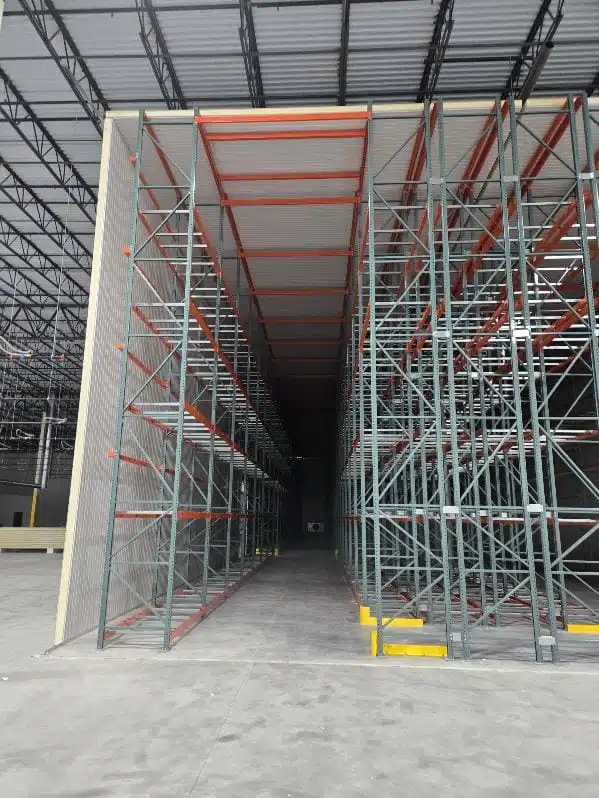
The rack is installed and secured to the floor according to the engineered design. Its frames and supporting members must be designed for the intended storage loads and the structural requirements associated with supporting the roof assembly.
The rack type and configuration must be established during design because they become integral to the completed structure.
- Install the enclosure panels
The cladding installer erects the walls around the rack. The walls are anchored at the floor and assembled using interlocking panels. The roof or ceiling panels are secured to the top of the rack as specified in the design.
Depending on the project, rack erection and panel installation may progress concurrently rather than waiting for all the rack work to be completed.
The rack does not automatically support the walls or connect to every part of the enclosure. Any additional connections must be specifically engineered and included in the approved design.
- Coordinate refrigeration and other building systems
Refrigeration equipment, electrical work, fire protection and other building systems must be coordinated with the rack layout and enclosure design. Equipment support requirements and clearances should be established early so that they do not conflict with the storage system or its structural components.
- Complete inspections and approvals
The integrated design and construction must meet applicable building code and project requirements. Required inspections, approvals and sign-offs must be coordinated among the parties responsible for the rack, enclosure and associated systems.
The benefit of an integrated approach is that these elements can be planned and coordinated together rather than treated as entirely separate construction projects. It does not eliminate permitting, engineering or inspection requirements.
Frequently Asked Questions
What is the difference between a rack supported cooler and a conventional cooler?
In a rack supported cooler, the racking supports the roof or ceiling assembly and is designed as part of the structure. In a conventional cooler, the building structure independently supports the enclosure, and the racking is installed separately inside it.
Are rack supported freezers faster to construct?
They can be, because rack installation and enclosure construction can be coordinated as an integrated project rather than completed as two entirely separate phases. Actual timelines depend on site preparation, engineering, permitting, equipment coordination and contractor schedules.
Can you change the racking system in a rack supported freezer?
Not as readily as in a conventional building. Because the rack is part of the structure, changing the rack type or configuration can affect the roof-support system and may require engineering and structural modifications. The intended storage method should be established before construction.
Is a rack supported cooler or freezer always less expensive?
Not necessarily. Rack supported construction can reduce initial costs by eliminating the need for a separate building framework and integrating the rack and enclosure construction. However, the best value depends on the facility’s expected operating life, refrigeration costs, storage requirements and future flexibility.
For example, building a larger cooler or freezer than currently needed may increase the ongoing cost of cooling unused space. A conventional building may also be worth the higher initial investment if the operation expects to change storage systems, reconfigure the layout or expand in the future. Evaluating both initial construction expenses and long-term operating costs can help determine which approach offers the best value over time.
Should you build for future cold storage capacity now or expand later?
That depends on the rate of growth, the cost of cooling unused space, the availability of additional building space and the feasibility of future expansion. A modest increase in capacity may justify building larger initially, while rapid growth may favor a separate future enclosure or a conventional building designed for phased development.
What should be considered before designing a rack supported cold storage facility?
Evaluate the required pallet capacity, inventory characteristics, rack type, material handling equipment, slab requirements, enclosure and refrigeration design, applicable code requirements and future expansion plans. These decisions should be coordinated before the rack and building design are finalized.
Plan Your Cold Storage Project with REB
Choosing between a rack supported cooler or freezer and a conventional building requires more than comparing construction costs. The right approach must account for storage density, inventory accessibility, refrigeration requirements, construction coordination and the flexibility the operation may need in the future.
REB Storage Systems International provides storage system design, project management, installation and permitting support to help businesses evaluate their options and coordinate the components of a cold storage project.
Contact REB to discuss your storage requirements and determine which approach best supports your operation. Fill out the contact form on this page or call us at (800) 252-5955.
About the Author
Philip Nelson is REB’s Vice President of Sales & Business Development. Since joining REB in 2016, Phil has held progressively senior sales leadership positions while helping customers implement projects ranging from conventional pallet racking systems to complex multi-level storage and automation solutions. His experience includes developing custom storage concepts, coordinating national account programs, managing vendor relationships, and supporting customers through every stage of the decision-making process.
Phil is an active member in the material handling industry. He has hosted presentations for Modern Materials Handling, has attended/exhibited at MODEX, ProMat, and MHEDA conferences, and is an active participant in other educational events and training programs in the industry.
You can learn more about Phil Nelson and the projects he has worked on by visiting his profile.
Share this post:
Submit Your Inquiry
Since 1962
REB has completed more than 100,000 projects in 15 countries (including all 50 states) for more than 20,000 customers across 50 industries, with 70% of customers as repeat buyers.
This is made possible by our team that has more than 300 years of industry experience designing and project managing material handling systems.
Learn more about REB's award winning service.