An Expert Used Pallet Rack Guide: Purchasing Used Warehouse Racking
Used pallet racking can be an economical option for expanding current storage capacity or outfitting a new warehouse. However, buying used rack is more complex than simply finding components at a lower price. The rack must be the right size, configuration, capacity and condition for the application, and its components must be compatible with one another.
This guide explains what to evaluate before purchasing used pallet racking, how to assess its condition and documentation, what questions to ask a seller, and when used rack may, or may not, be the right choice for your warehouse.
Is Used Pallet Racking Right for Your Warehouse?
Used pallet racking can make sense when an operation needs to control equipment costs while building a new storage system. However, used rack is not automatically the best option simply because it costs less than new rack.
The rack was originally designed and installed for a particular application. Its dimensions, load capacity, configuration, and engineering may have been appropriate for that facility, but that does not mean it’s right for every application.
For that reason, start with your warehouse requirements rather than the rack that happens to be available. Once you know what the storage system needs to accomplish, you can determine whether available used equipment is a good fit.
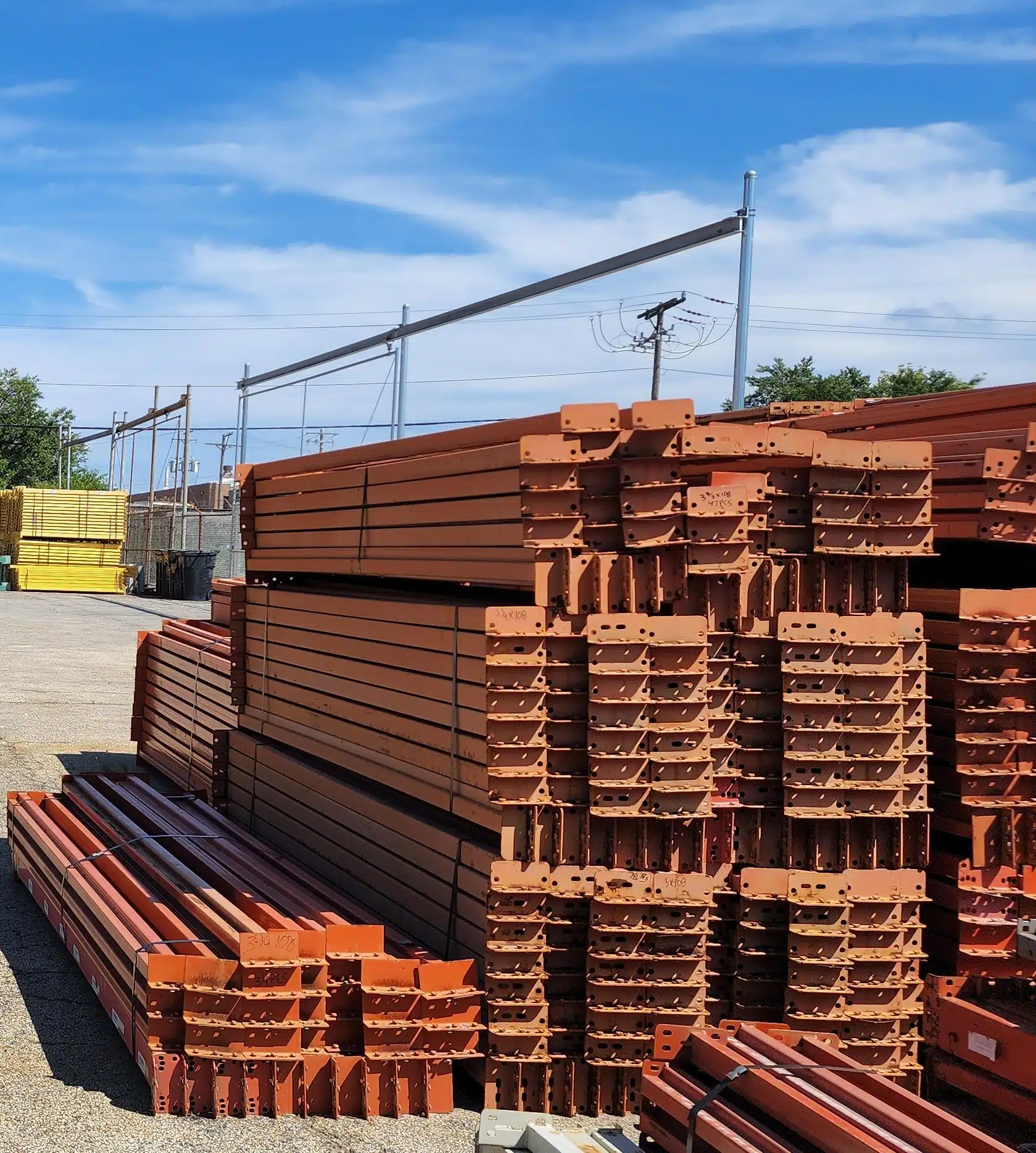
What to Evaluate Before Buying Used Pallet Racking
Storage Requirements and Rack Dimensions
Before looking for used pallet racking, it is important to establish the storage and handling requirements. Used equipment is limited to the configurations and components that are available, so it is better to first determine what type of storage system the application requires and then evaluate whether the available used rack can meet those requirements. Trying to select a rack system based solely on what used is available can result in compromises in storage capacity, accessibility, space utilization, or operational efficiency.
Consider:
- Pallet dimensions and weights
- Product flow (for example, is first-in, first-out is needed)
- Product dimensions
- Building clear height
- Available floor space
- Required aisle widths
- Forklift or other material handling equipment being used
- Required accessibility to inventory
- Anticipated future growth
These factors can help determine whether selective pallet rack, pallet flow rack, push-back rack, drive-in rack, or another storage system is appropriate for the application.
For example, selective pallet rack provides direct access to every pallet position and is often a good fit when a warehouse stores many different SKUs or requires frequent access to individual pallets. Pallet flow rack, on the other hand, uses inclined roller lanes to move pallets through the rack, making it well suited to high-volume operations that benefit from FIFO (first-in, first-out) inventory rotation. Push-back rack can provide greater storage density when direct access to every pallet is less important, while drive-in rack can be useful for storing large quantities of fewer SKUs.

The available space and dimensions of the warehouse also help determine which system makes sense. For example, a system designed to maximize pallet density may require less aisle space but provide less individual pallet accessibility. Similarly, the building’s clear height can affect how many storage levels can be accommodated.
Once the appropriate rack type and configuration have been established, specific dimensions, including upright height and depth; beam length; beam elevations; aisle width; and required clearances, can be determined based on the building and inventory.
Load Capacity and Configuration
Load capacity should not be determined simply by looking at a beam or upright.
The capacity of a pallet rack system depends on factors including its components, configuration, beam elevations, loads, and other design conditions. A rack system that previously supported a particular load does not automatically have the same capacity when installed in a different configuration.
Where available, review the rack’s original engineering information and load application and rack configuration (LARC) drawings. These documents can help establish the configurations and capacities for which the system was designed.
If the proposed application or configuration differs from the original installation, the system should be evaluated by a qualified rack professional or engineer before it is installed.
Manufacturer and Component Compatibility
Identify the original rack manufacturer whenever possible. Manufacturer labels, component markings, drawings, and other documentation can help establish what type of rack you are evaluating.
This is particularly important when purchasing components from multiple sources.
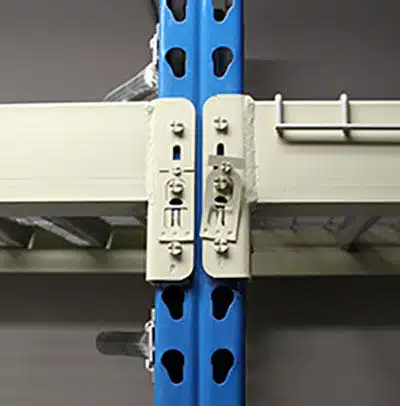
Two rack components may appear similar and even physically connect while still being designed for different systems. Manufacturers use different component designs and connection geometries, and components should not be mixed simply because they appear to fit.
When evaluating used rack, determine which components belong together and whether the proposed combination is appropriate for the intended application.
Condition and Damage
Cosmetic appearance alone is not an adequate condition assessment. Paint or surface wear may have little significance, while structural damage or modifications can affect whether a component is suitable for reuse.
Ideally, inspect the actual equipment before purchasing it. If an in-person inspection is not possible, request detailed photographs of the uprights, beams, connections, baseplates, bracing, manufacturer markings, and any areas showing damage or repairs.
When the condition of the equipment is uncertain, a qualified professional should evaluate it before the rack is put into service.
- Inspect components for signs of:
- Bent or damaged uprights
- Damaged beams
- Damaged braces or struts
- Damaged footplates
- Cracks or deformation
- Corrosion
- Forklift impact
- Welded or other repairs
- Unapproved modifications
- Missing or damaged components
Documentation, Previous Installation, and Building Requirements
Documentation can make it significantly easier to determine whether used rack is appropriate for a new application.
Ask the seller what information is available, including:
- Original manufacturer
- Engineering drawings
- LARC drawings
- Load capacity information
- Previous configuration
- Original installation location
- Installation or inspection records
- Records of repairs or modifications
- Building or permitting information, where applicable
Combining New and Used Pallet Racking to Reduce Costs
Choosing between new and used pallet racking does not have to be an all-or-nothing decision. In some applications, combining new and used equipment can help reduce project costs while still allowing the storage system to meet the warehouse’s requirements.
For example, an operation may already have usable rack that can be incorporated into an expansion. Rather than replacing the entire system, the existing rack can be evaluated and reused where appropriate, while new rack or components are added where the existing equipment does not meet the requirements.
A long-term REB customer provides an example of how this approach can work. The customer, an injection molding manufacturer, initially worked with REB to remove used rack from a building they were vacating. A few years later, as the company expanded, it purchased used rack from REB. Over the following years, REB helped the company with rack teardowns, reassemblies, and additions as its storage requirements changed. Read the full case study.
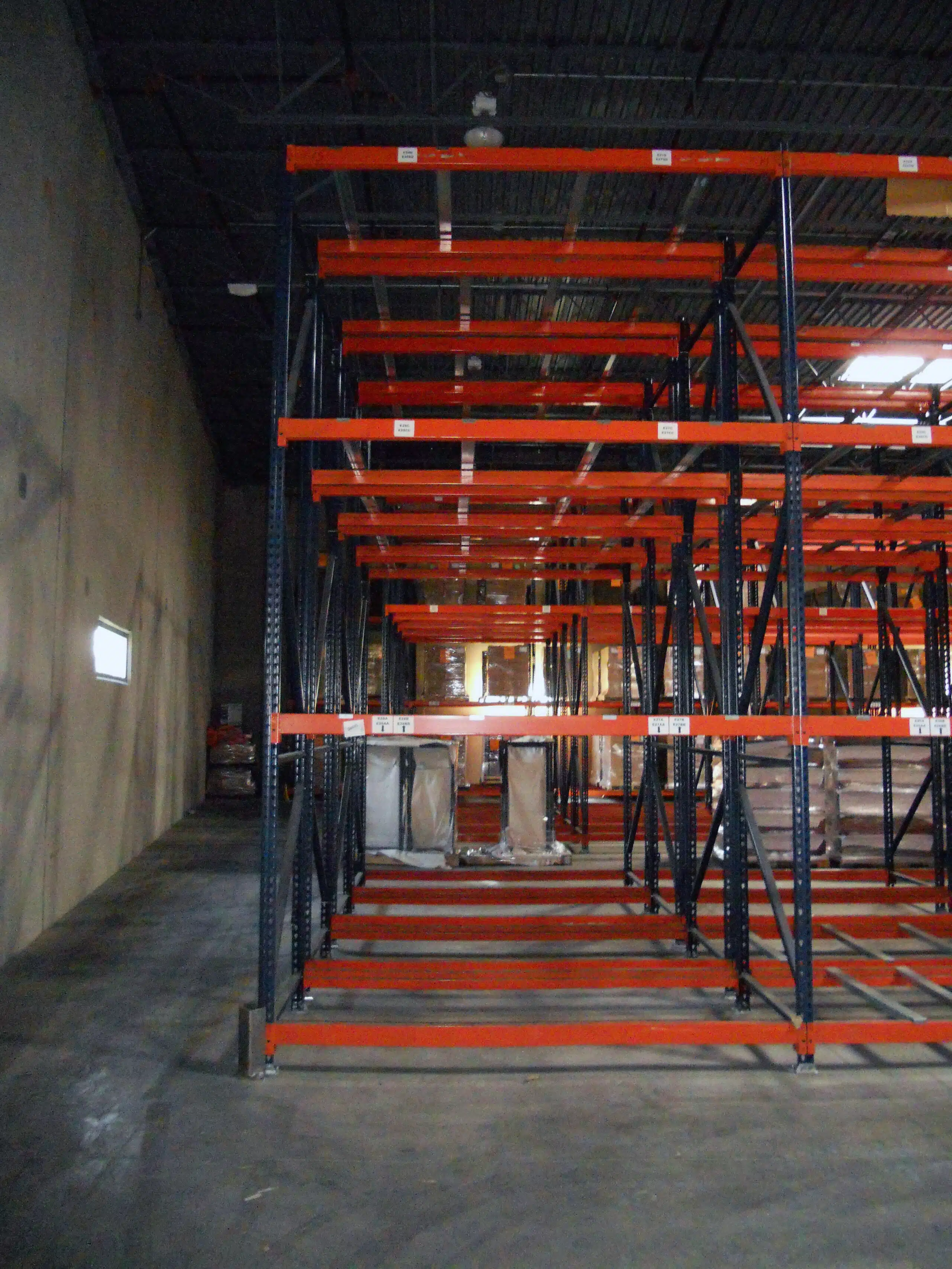
This type of approach can provide greater flexibility than choosing entirely new or entirely used equipment. Used rack can be reused where it makes sense, while new equipment can fill gaps in dimensions, configurations, capacities, or availability. However, used and new components should not be combined simply to reduce the equipment cost. The compatibility, condition, capacity, configuration, and engineering requirements of the resulting system still need to be evaluated.
When Should You Work with a Rack Professional?
Working with a rack professional before purchasing used equipment can help you make the decision with the entire warehouse in mind, not simply whether the rack is available or affordable. It provides a path toward a storage system that is safer, more effective, and better aligned with the requirements of the facility.
Rack Safety
A professional can evaluate the condition and configuration of used rack, verify that the proposed system is appropriate for the intended loads, and identify potential hazards that may not be apparent from a visual inspection. They can also recommend rack protection and other safety measures based on how the warehouse operates.
Compliance and Engineering
Rack must be designed and installed to meet applicable building codes, seismic requirements, and other local requirements. A rack professional can help determine what engineering, permits, documentation, and inspections may be required for the project and ensure these considerations are addressed before installation.
An Optimal Warehouse Layout
The rack itself is only one part of an effective storage system. A rack professional can evaluate the warehouse as a whole to determine the most efficient arrangement of rack, aisles, work areas, doors, columns, and material handling equipment. This can help maximize storage capacity while maintaining appropriate access and efficient product movement.

Make Used Pallet Racking Part of an Optimal Storage System
Used pallet racking can provide significant value when it is evaluated as part of the overall warehouse design rather than treated simply as discounted equipment.
REB has a rotating supply of used racking and other material handling products. We are highly knowledgeable in evaluating used pallet racking and determining whether it can be incorporated into an existing or planned warehouse. When used equipment doesn’t meet every requirement, REB can also identify where new components or an alternative storage solution may provide a better fit.
Considering used pallet racking for your warehouse? Contact REB by filling in the form on this page or calling us at (800) 252-5955.
Share this post:
Submit Your Inquiry
Since 1962
REB has completed more than 100,000 projects in 15 countries (including all 50 states) for more than 20,000 customers across 50 industries, with 70% of customers as repeat buyers.
This is made possible by our team that has more than 300 years of industry experience designing and project managing material handling systems.
Learn more about REB's award winning service.